
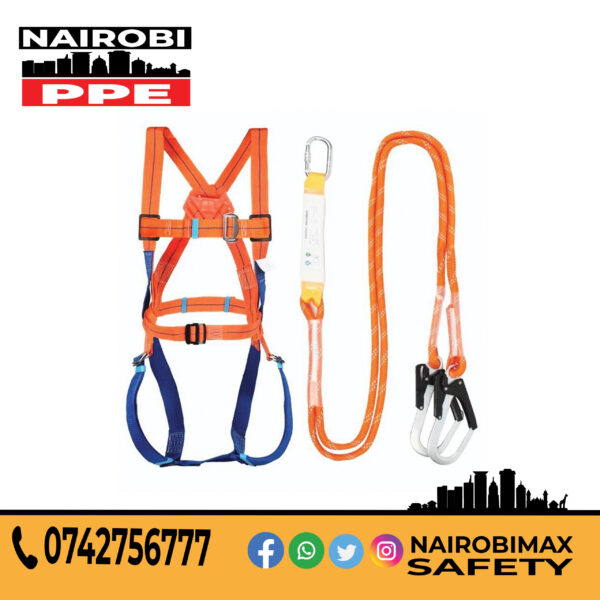
A safety harness and lanyard are essential components of personal fall protection equipment used in various industries to protect workers from falls when working at heights. Here’s a description of each:
- Safety Harness:
- Purpose: A safety harness is designed to distribute the force of a fall across the wearer’s body, reducing the risk of injury. It is a critical element of fall arrest systems.
- Construction: Typically made of durable and high-strength materials such as nylon or polyester webbing. The harness includes straps, buckles, and connectors that form a secure and comfortable fit around the wearer.
- Components:
- Shoulder Straps: Go over the shoulders and connect to the back of the harness.
- Chest Strap: Secures the harness around the chest.
- Leg Straps: Wrap around the thighs to prevent the wearer from slipping out of the harness.
- Dorsal Attachment Point: Located at the back for connecting the lanyard or other fall protection devices.
- Front and Side D-rings: Additional attachment points for tools or secondary connections.
- Lanyard:
- Purpose: A lanyard is a flexible line that connects the safety harness to a secure anchor point. It is a crucial link in the fall arrest system and is designed to absorb energy during a fall, limiting the force applied to the wearer.
- Construction: Lanyards are typically made of materials that can absorb energy, such as shock-absorbing webbing or elastic materials. The length of the lanyard may vary based on the specific requirements of the job.
- Shock Absorber: Incorporated into the lanyard to reduce the impact force on the user and the anchorage point.
- Connectors: Equipped with locking snap hooks or carabiners at both ends. One end connects to the dorsal D-ring on the harness, while the other attaches to a secure anchor point.
Usage Guidelines:
- Always inspect the safety harness and lanyard before each use for any signs of damage or wear.
- Ensure proper fit and adjustment of the harness to prevent slippage or discomfort.
- Choose the appropriate type and length of lanyard based on the specific job requirements and potential fall hazards.
- Regularly train users on proper donning, doffing, and usage of the equipment.
It’s crucial to follow safety regulations and guidelines provided by relevant authorities and manufacturers when using safety harnesses and lanyards to ensure the protection of workers at heights.
Reviews
There are no reviews yet.